If the World Were 100 People

Let’s simplify the world.
Imagine the global population—now over 8 billion people—reduced to just 100 individuals. Who would they be?
Geography & Population
Out of 100 people:
- 59 would live in Asia
- 18 in Africa
- 9 in Europe
- 8 in Latin America & the Caribbean
- 6 in North America & Oceania
Where you are born is not evenly distributed.
It is the first variable in your life system.
Wealth & Inequality
Out of 100 people:
- 10 would control the majority of global wealth (over 70%)
- 50 would share less than 2%
- The rest would fall somewhere in between
Global inequality is not subtle—it is structural.
Water & Sanitation
Out of 100 people:
- 74 would have safely managed drinking water
- 26 would not
- 58 would have safely managed sanitation
- 42 would not
That means:
- Over 2 billion people still lack safe drinking water
Around 3.4 billion lack safe sanitation
Education
Out of 100 people:
- 86 would be able to read and write
- 14 would not
- Only a small minority (~7–10) would complete higher education
Education is improving globally—but access and quality remain uneven.
Technology & Connectivity
Out of 100 people:
- 74 would have internet access
- 26 would not
That’s over 2 billion people still offline
Infrastructure & Basic Access
Out of 100 people:
- 92 would have access to electricity
- 8 would not
Even basic infrastructure is not universal.
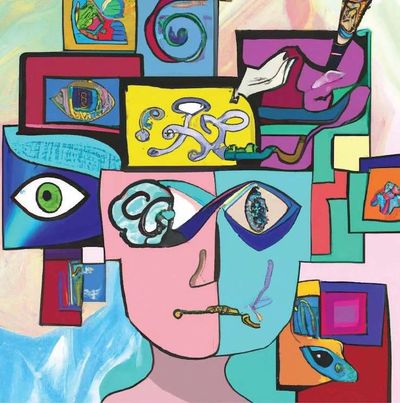
Now consider something global datasets rarely highlight: How people think.
Out of 100 people:
- 15–20 would be neurodivergent
(including ADHD, autism, dyslexia, and other cognitive differences) - A smaller subset would be “spikey learners”:
- high ability in some domains
- real difficulty in others
These individuals often:
- detect patterns others miss
- think across systems
- generate non-linear insight
And yet:
- Many would be misunderstood in school
- Many would not have their strengths recognized
- Many would be evaluated using systems not designed for them
This is not just variation.
It is cognitive distribution—as real as geography or wealth.
Systems & Structure
Out of 100 people:
- Some would be born into systems that amplify opportunity
- Others into systems that constrain it
Some would experience:
- stability
- safety
- access
Others would face:
- scarcity
- instability
- systemic barriers
Most of this is decided before a single decision is made.
The Pattern
If you step back, a pattern emerges:
- Birth is random
- Systems are structured
- Outcomes are unequal
And yet, we often tell a different story:
That outcomes are mostly earned.
This model challenges that assumption.
The Spikey Insight
Most people are trained to see outcomes:
- success
- failure
- achievement
Spikey minds learn to see:
- starting conditions
- system dynamics
- hidden variables
That shift—from outcome to system—is everything.
Zoom Out
Now take one more step back.
If individuals are shaped by:
- chance
- systems
- structure
Then so is humanity.
Civilizations inherit:
- geography
- inequality
- knowledge gaps
- blind spots
And sometimes, those systems fail.